
Indian amethyst · One specimen only
Amethyst Sceptre Cluster
Kakamanurle Mine, Karur District, Tamil Nadu, India
£165
Postage: £3.70, added to your specimen price before payment. Choose the region matching your delivery address.
International rates are for parcels up to 2 kg. Contact Avalon before buying heavier or oversized pieces. Royal Mail 24 and 48 are service names, not guaranteed arrival times.
Description
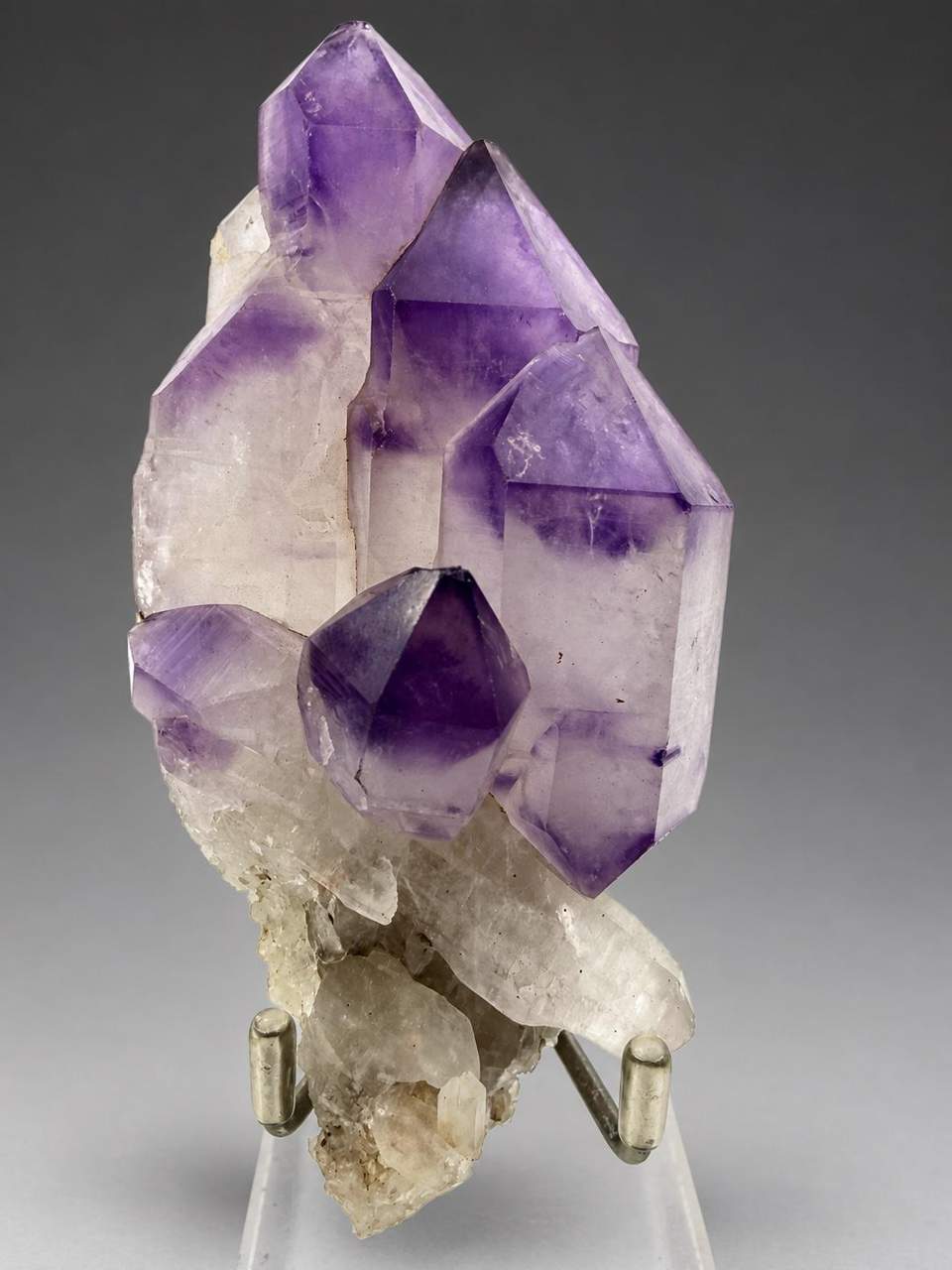
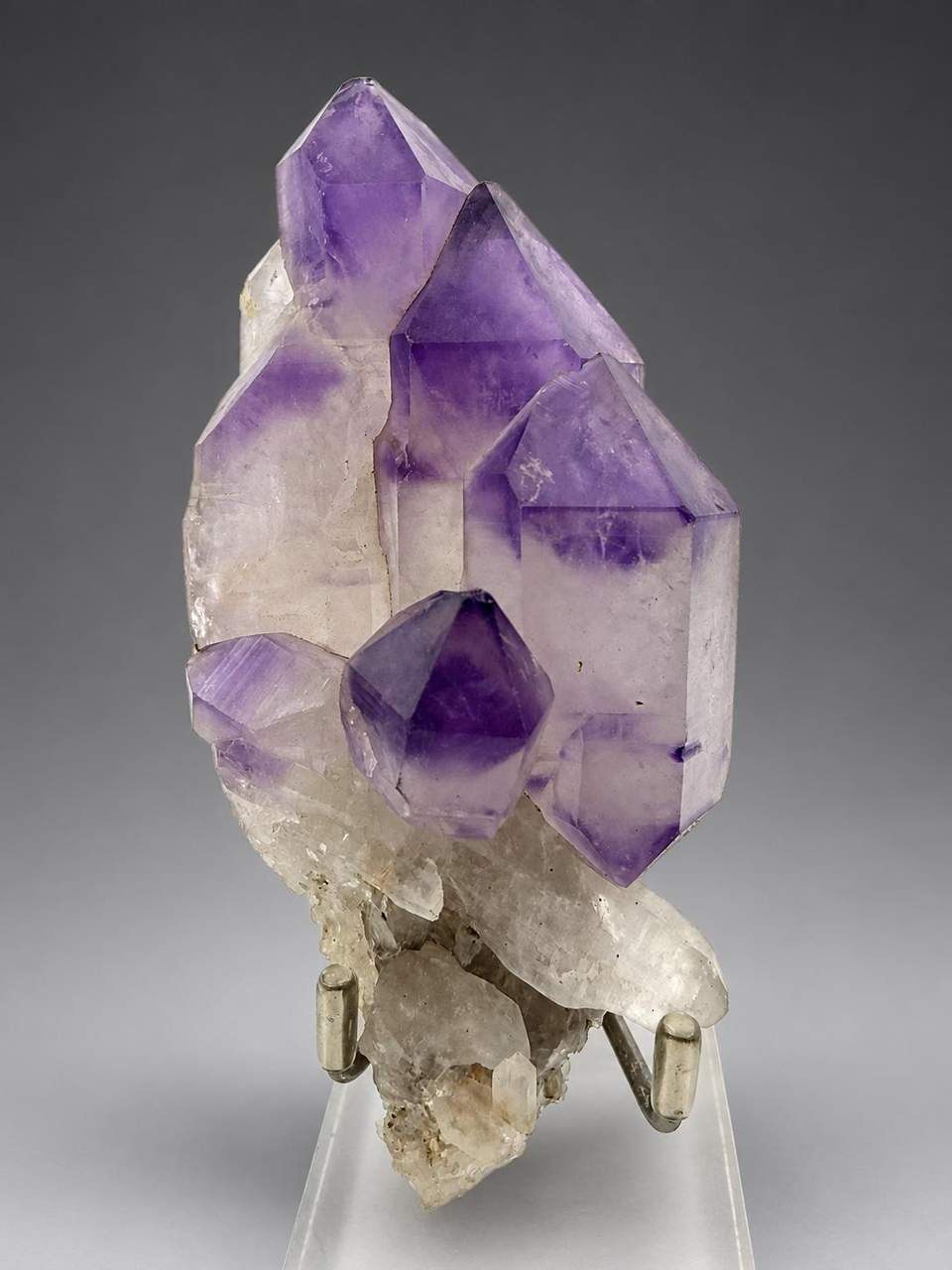
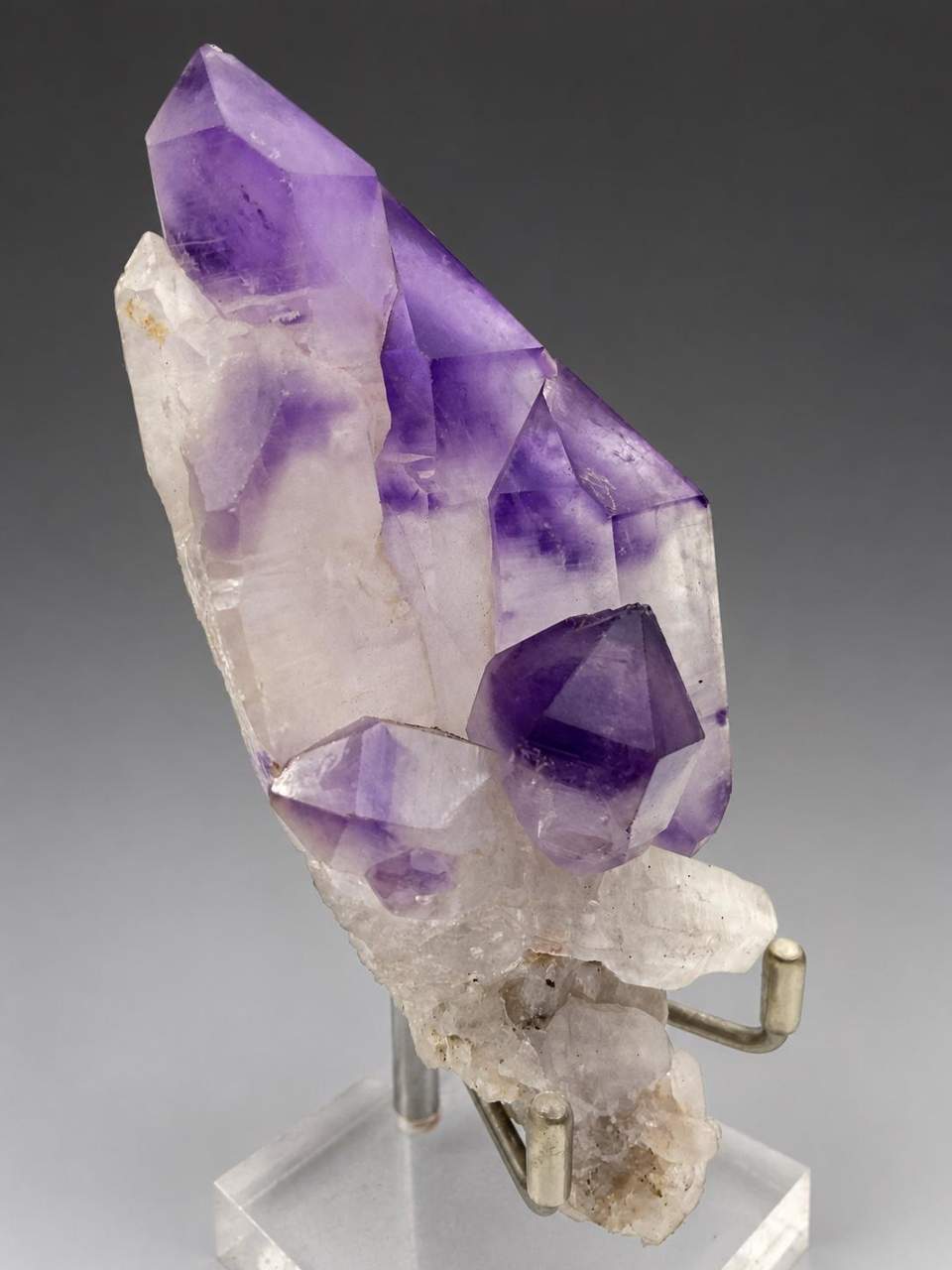
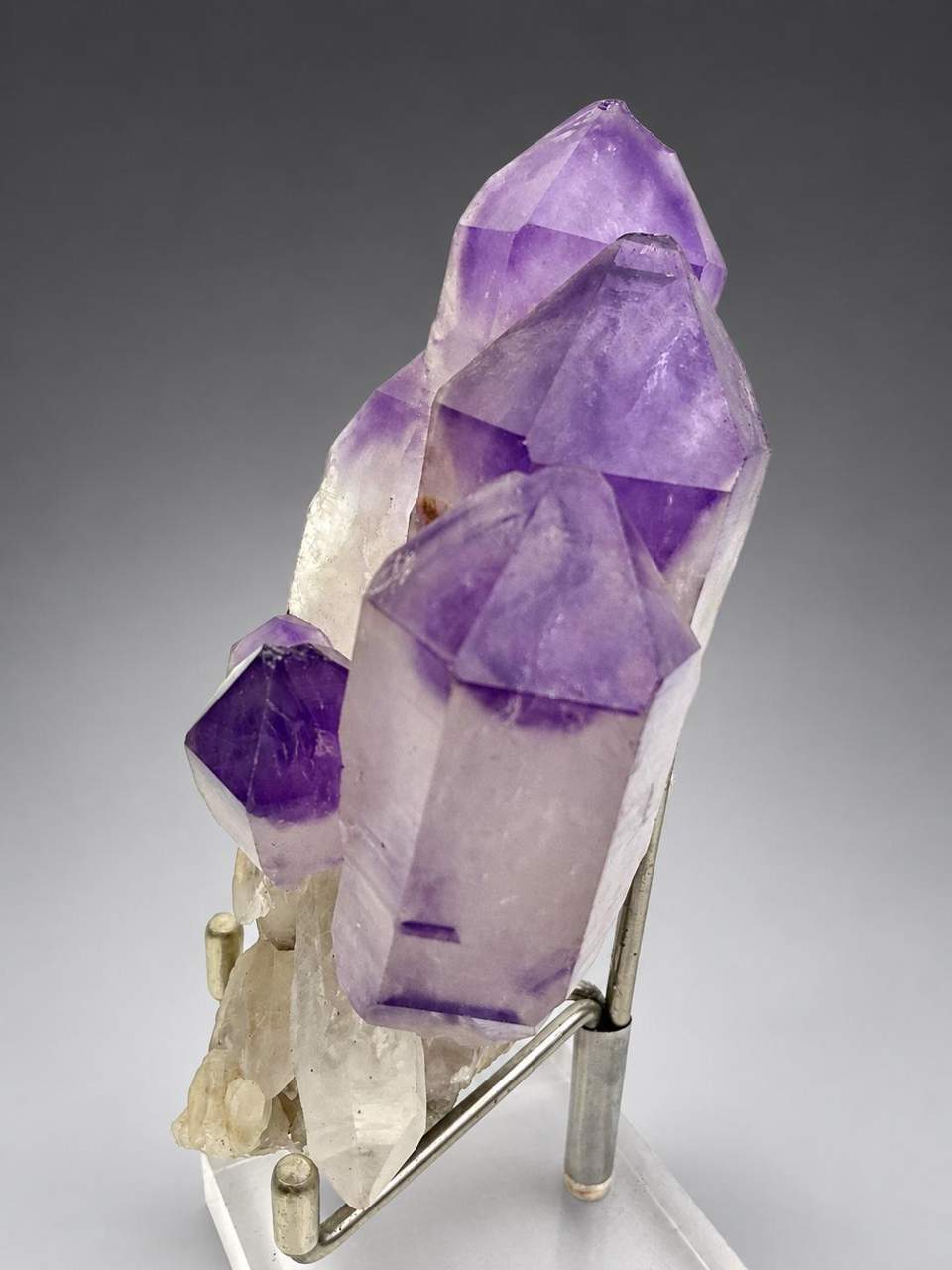
A distinctive natural Amethyst sceptre cluster with sharply defined terminations, attractive purple colour zoning and strong architectural display presence.
This sculptural cabinet specimen comprises several intergrown quartz crystals displaying classic sceptre development: later Amethyst growth has formed over earlier, narrower Quartz stems. The enlarged terminations create a bold tiered composition, with the crystals rising together in a well-balanced cluster.
Purple colour is concentrated toward the terminations and fades naturally into paler translucent Quartz below. The contrast makes the growth sequence particularly clear, while bright faces and internal veils add depth as the specimen is viewed from different angles.
The principal crystals show strong hexagonal form and clearly defined terminal faces. Natural contacts, internal fractures, surface irregularities and minor edge wear are visible and form part of the specimen's history.
Locality: Kakamanurle Mine, Karur District, Tamil Nadu, India. The locality is recorded as supplied with the specimen.
The sceptre description refers to a broader crystal head above a narrower stem. This change in proportion gives the specimen a different silhouette to a simple prism and draws attention to separate stages of growth. The relationship between the stem and the head is a useful feature to study when comparing Quartz habits.
Amethyst is the violet variety of Quartz, so its colour and pointed crystal habit belong to the same mineral family as clear rock crystal. Violet colour is associated with iron-related features in the crystal structure and natural irradiation. Colour can vary within a single crystal, giving different impressions at the tips, edges and thicker parts of a group.
A cluster of Amethyst is interesting at two scales: the outline of the whole piece and the individual faces that make up its surface. Closely grouped crystals create a sparkling texture, while larger points give the specimen direction and shape. The balance between pale and darker areas is useful when comparing one Amethyst specimen with another.
The recorded origin is Kakamanurle Mine, Karur District, Tamil Nadu, India. Within a collection of Amethyst specimens, this locality gives the piece a geographical identity alongside its particular crystal habit and natural setting.
The specimen measures 11 × 6 × 4 cm, with a recorded weight of 200 g. The proportions give a useful guide to its place in a display, with the individual crystal arrangement and mineral association remaining the principal points of interest.
Support the matrix or the supplied mount when moving the piece, avoiding pressure on the Amethyst points. A shaded indoor display is a sensible choice for retaining its colour and keeping the fine crystal surfaces free from unnecessary handling.
Available from Avalon
A striking Indian Amethyst cabinet specimen.
Ask us about the price, availability, delivery or additional photographs. The custom acrylic display stand is included.
Contact Avalon