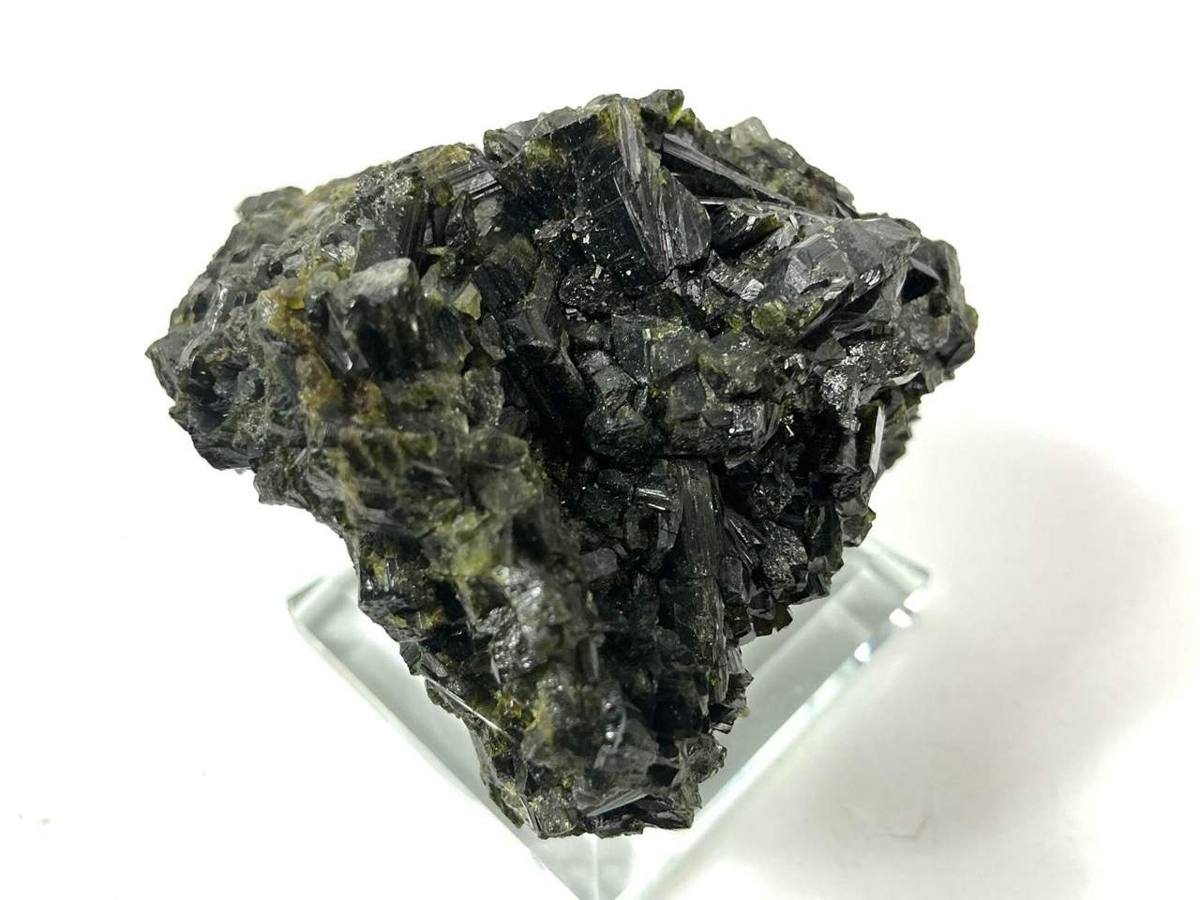
One cabinet specimen
Green Lustrous Epidote Crystals
Baluchistan (Balochistan), Pakistan
£150
Postage: £3.70, added to your specimen price before payment. Choose the region matching your delivery address.
International rates are for parcels up to 2 kg. Contact Avalon before buying heavier or oversized pieces. Royal Mail 24 and 48 are service names, not guaranteed arrival times.
Description
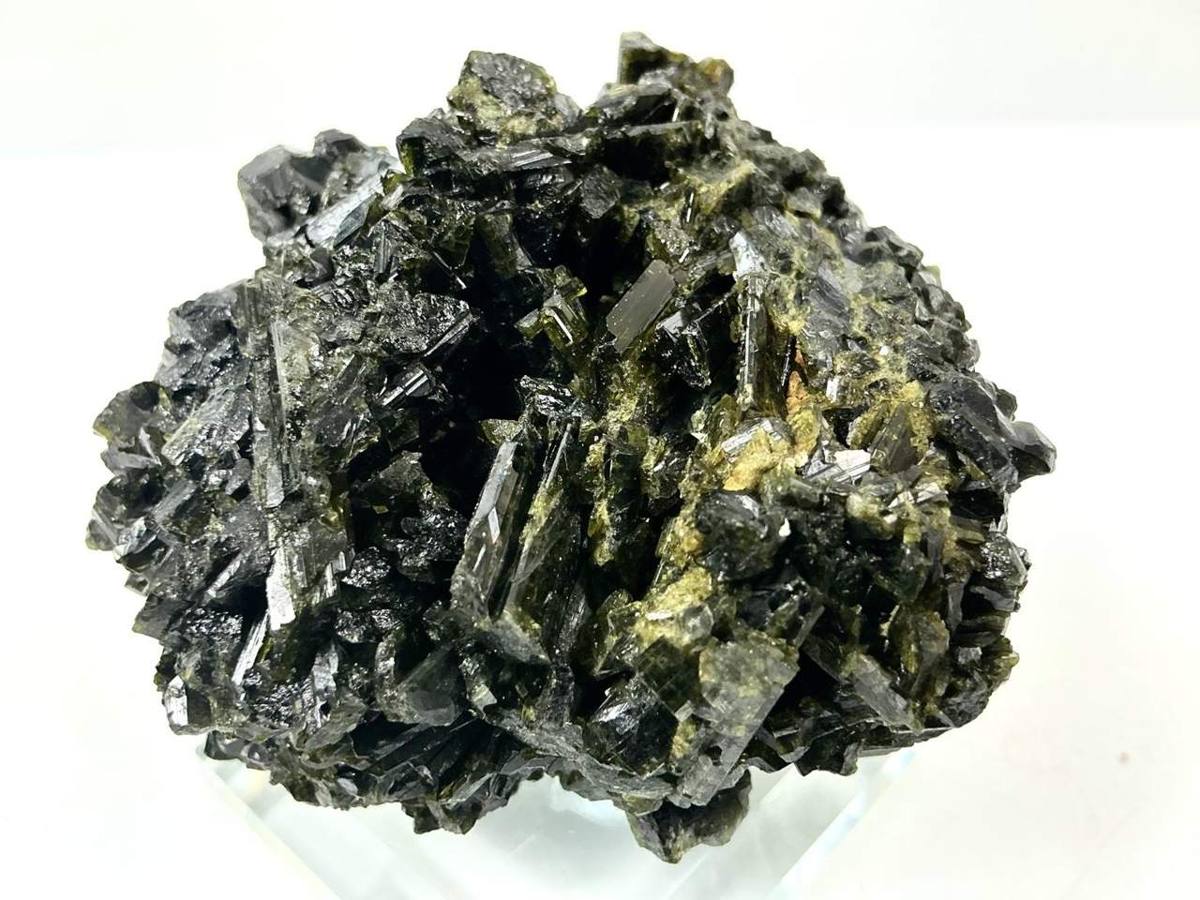
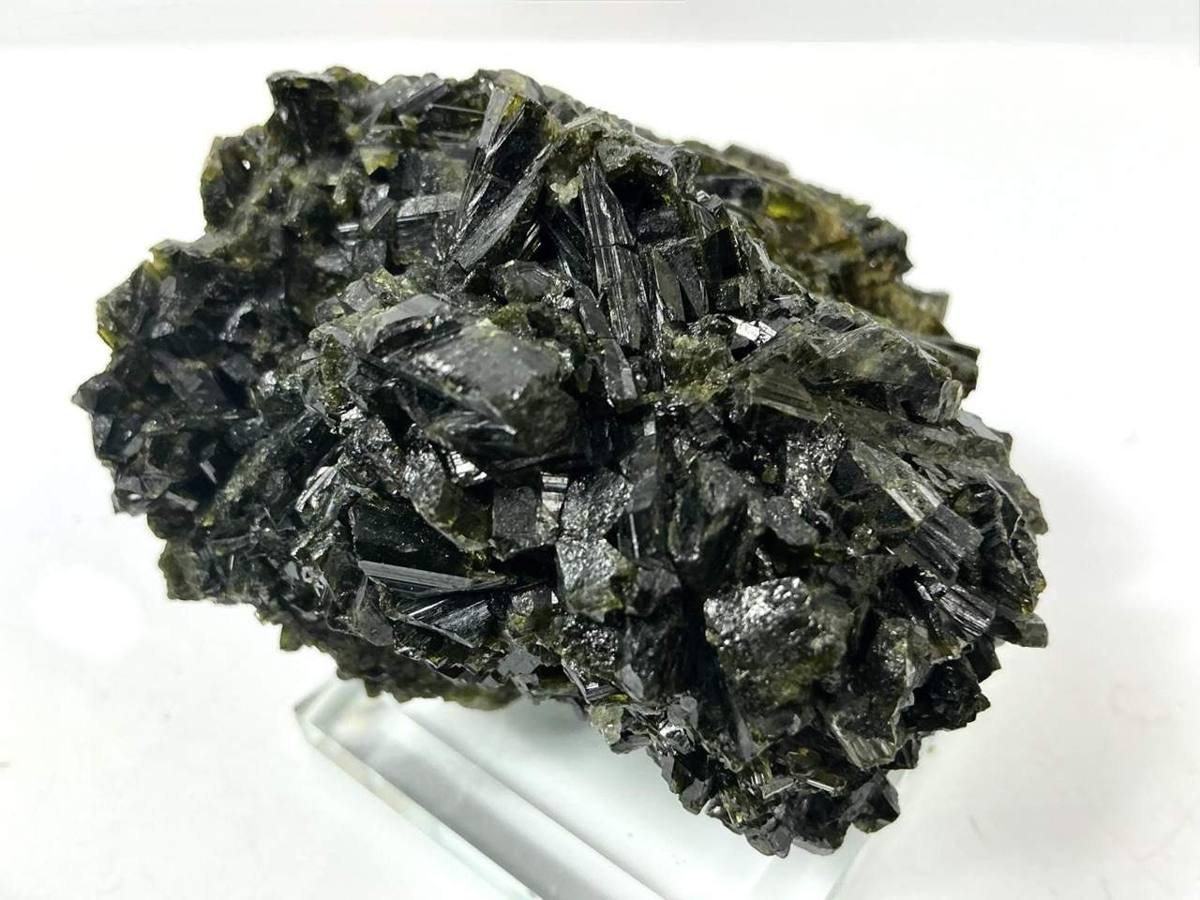
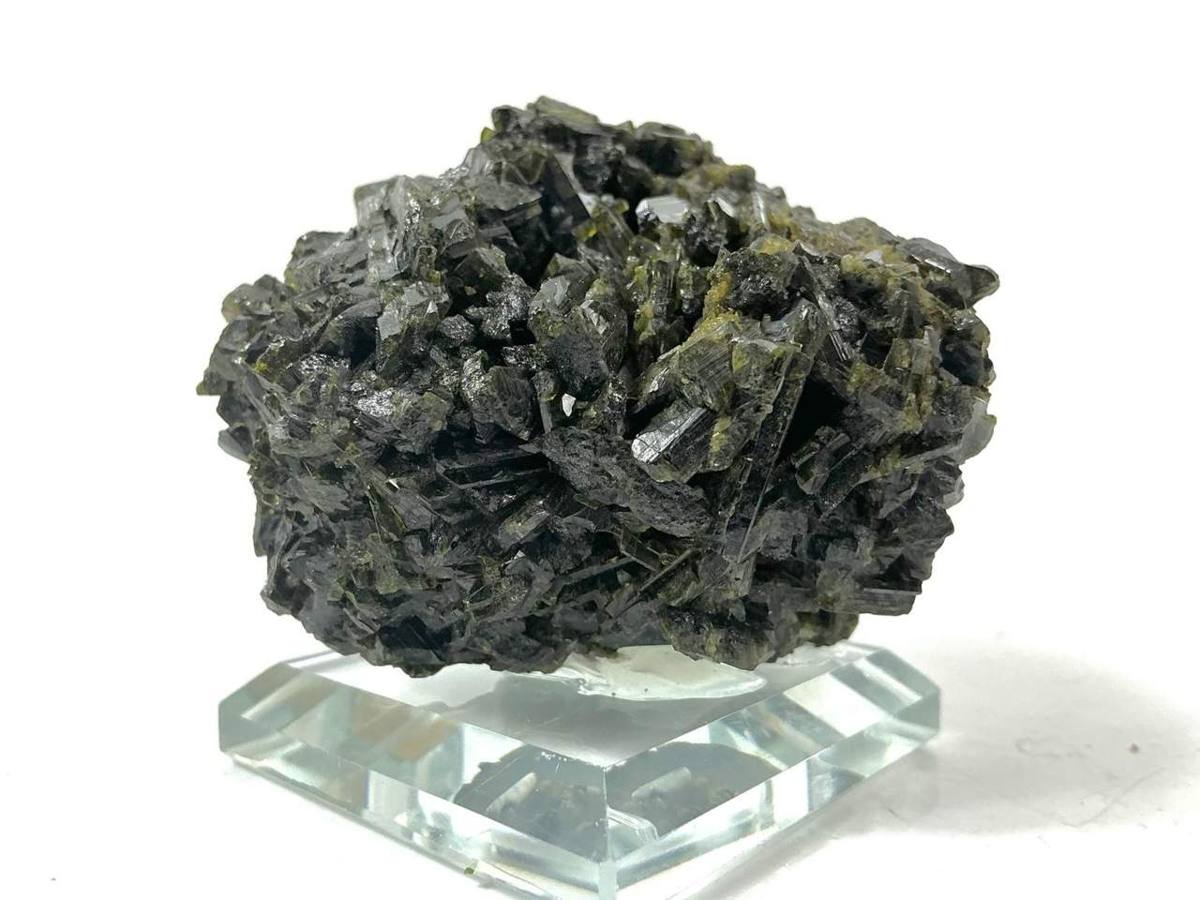
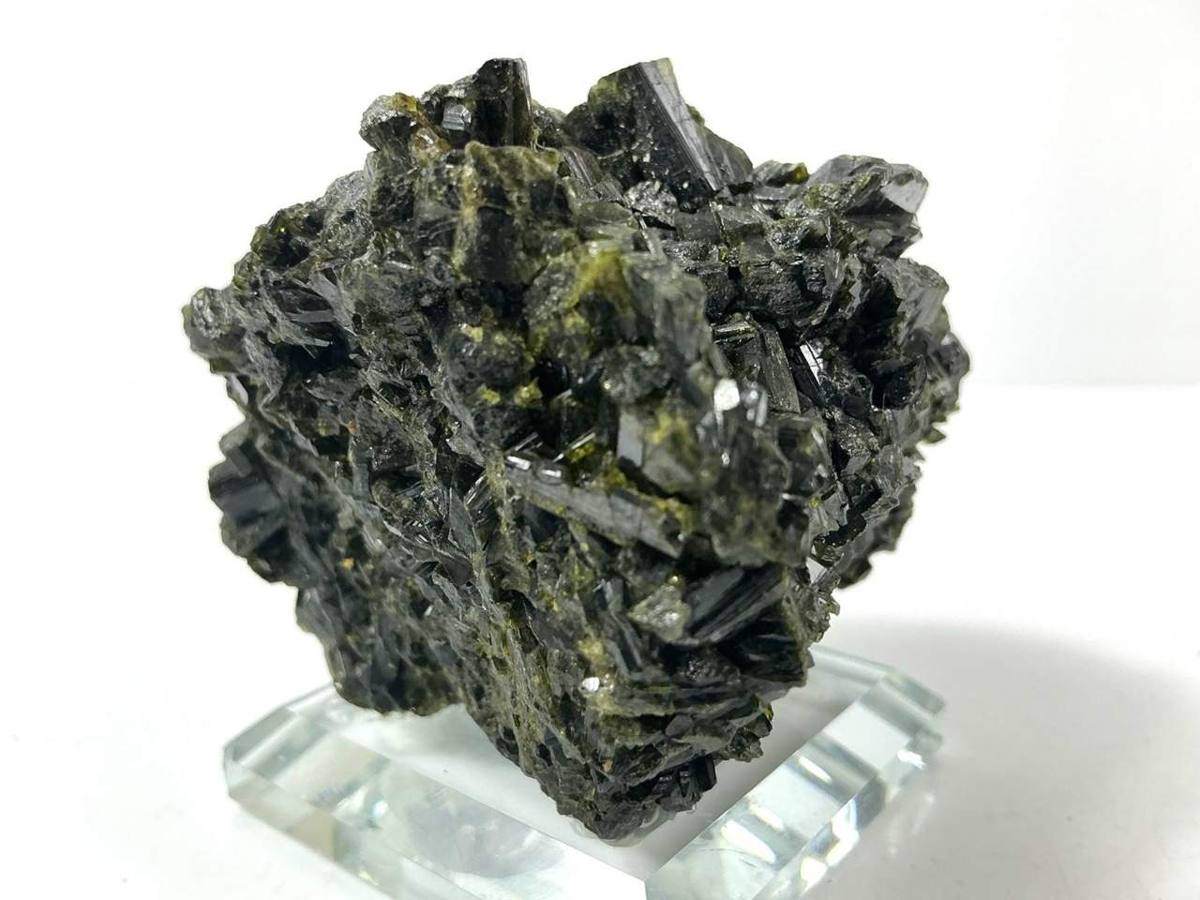
A richly textured cluster of deep olive-green Epidote crystals, with broad reflective faces and elongated crystals crossing at different angles. Open spaces between the crystals reveal the depth of the cluster, with brighter green edges and small ochre-coloured patches.
The bevelled glass display base is included.
The supplied origin is Baluchistan, Pakistan; no more precise mine or district is recorded.
The crossing arrangement described above is an important part of the specimen’s silhouette. It lets the direction of individual crystals be followed through the group, with open spaces making their outlines more apparent. Intersecting crystals alone do not establish a specific twin law; here the description concerns the visible arrangement rather than a laboratory-confirmed crystallographic relationship.
Epidote is a calcium-aluminium-iron silicate with a characteristically green range of colours. Its crystals can be elongated and show lengthwise striations, while dense aggregates may appear much darker. It occurs in metamorphic and hydrothermal settings, giving the species a geological interest alongside its often strongly defined crystal growth.
The appearance of Epidote depends on both the thickness of the crystals and how their faces catch the light. A surface that looks nearly black in shadow may show greener areas at an edge or under different illumination. For a collector, the direction of growth, exposed faces and intergrowth of the crystals help distinguish the specimen more reliably than a single overall colour impression.
The recorded origin is Baluchistan (Balochistan), Pakistan. Within a collection of Epidote specimens, this locality gives the piece a geographical identity alongside its particular crystal habit and natural setting.
The specimen measures 80 × 70 × 60 mm, with a recorded weight of 311 g. The proportions give a useful guide to its place in a display, with the individual crystal arrangement and mineral association remaining the principal points of interest.
Support the stable matrix or the supplied mount when moving the specimen, avoiding pressure on projecting growth. A secure indoor display allows its natural form and surface detail to be appreciated while protecting exposed crystal edges.
Available from Avalon
Ask about this Epidote.
Contact me for availability or delivery details.
Contact Avalon