Large cabinet mineral · One specimen only
Pyrite with Calcite, Quartz and Galena
Huanggang Fe–Sn deposit, Inner Mongolia, China · supplier locality
Sold
Description
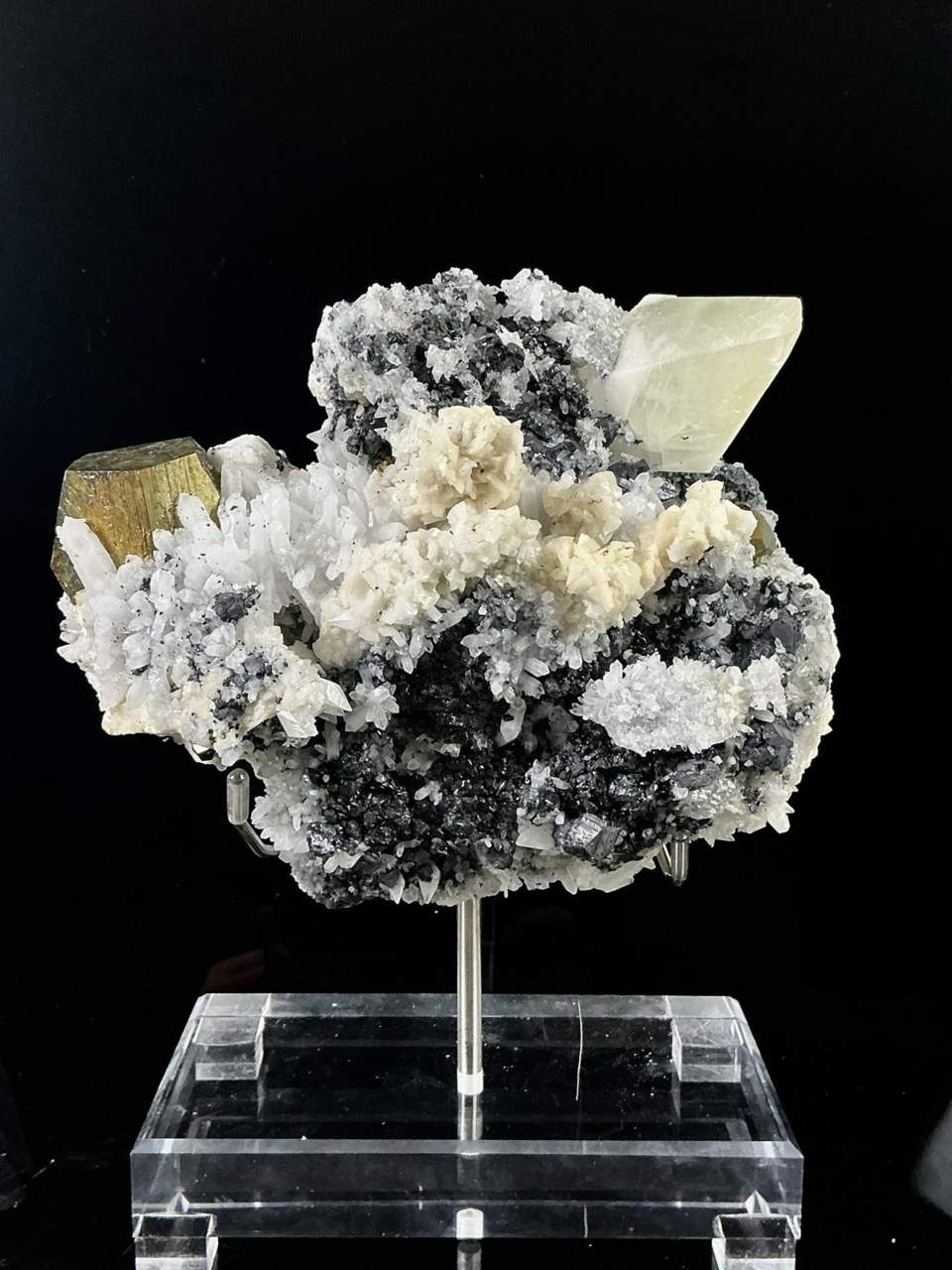
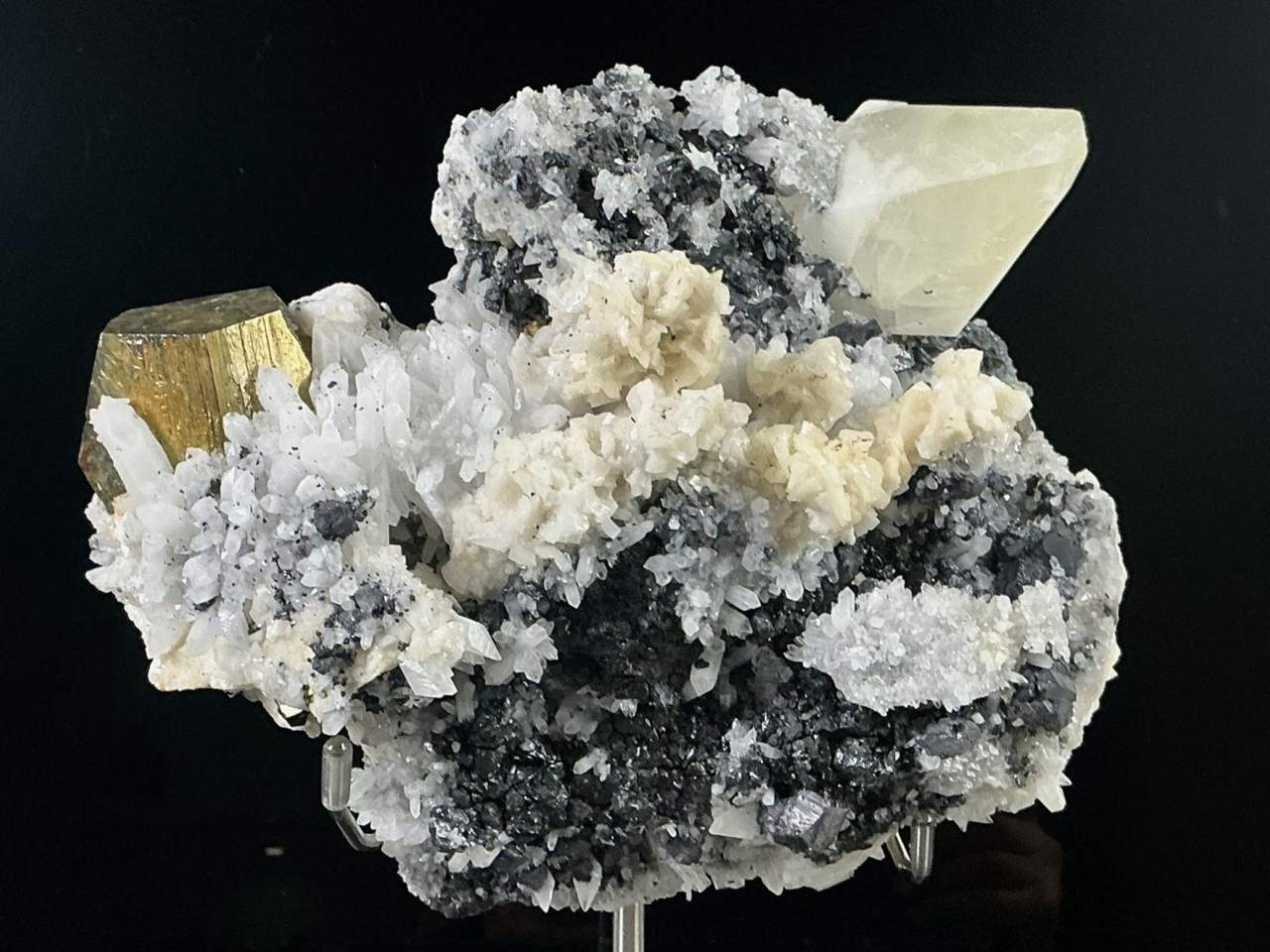
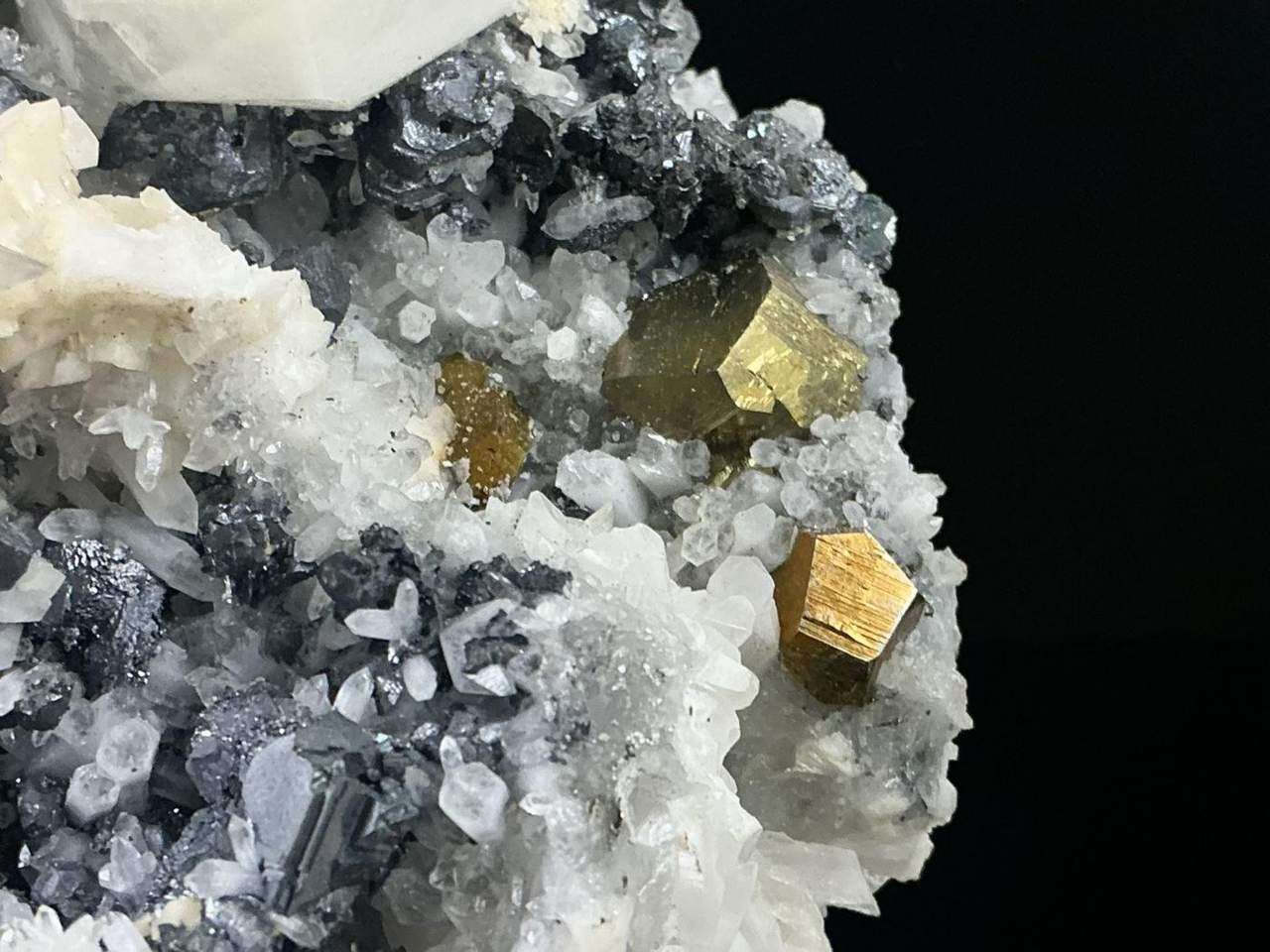
A highly aesthetic and substantial cabinet specimen featuring lustrous cubic Pyrite set among sparkling Quartz, metallic Galena and well-formed pale Calcite.
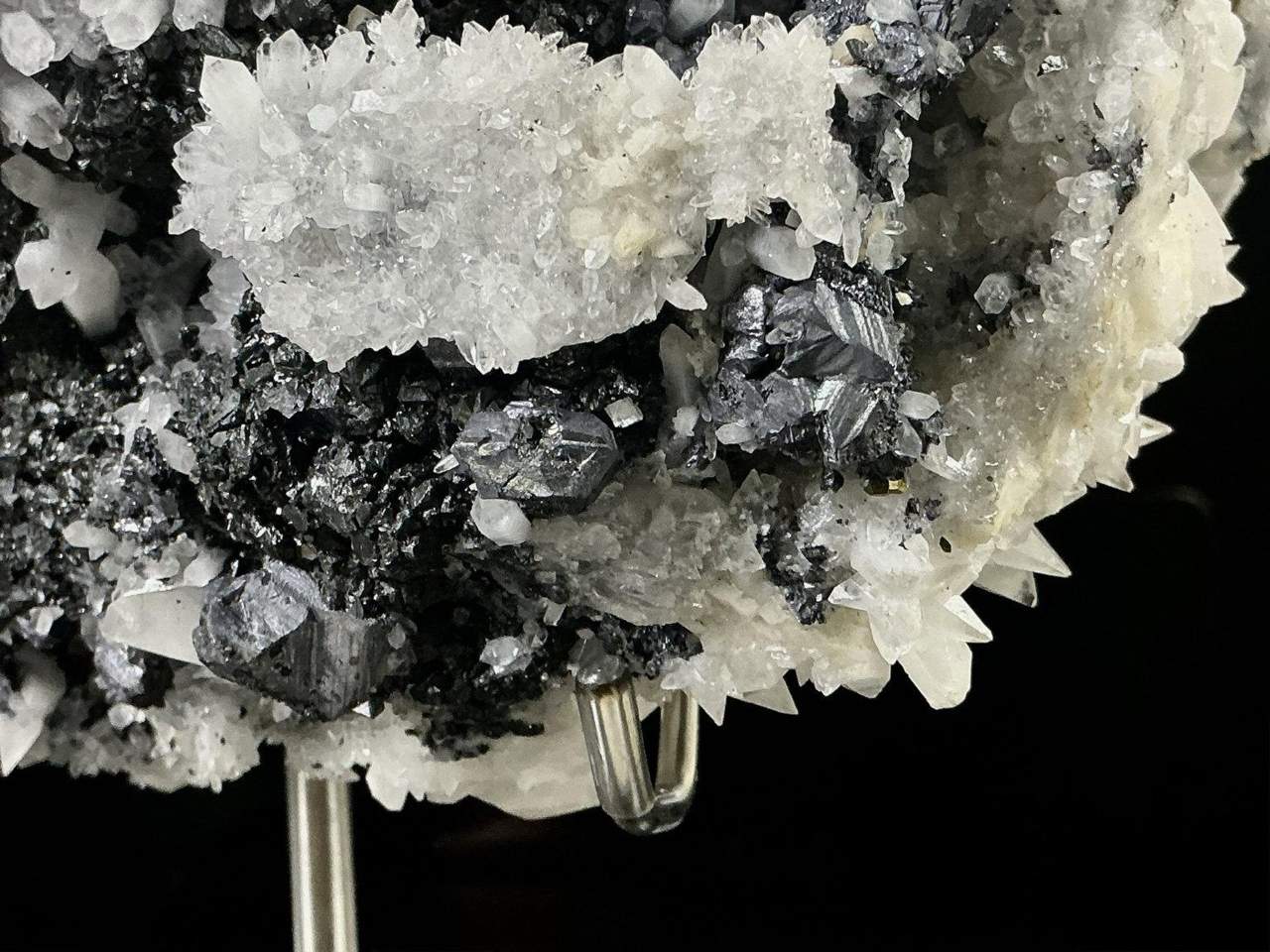
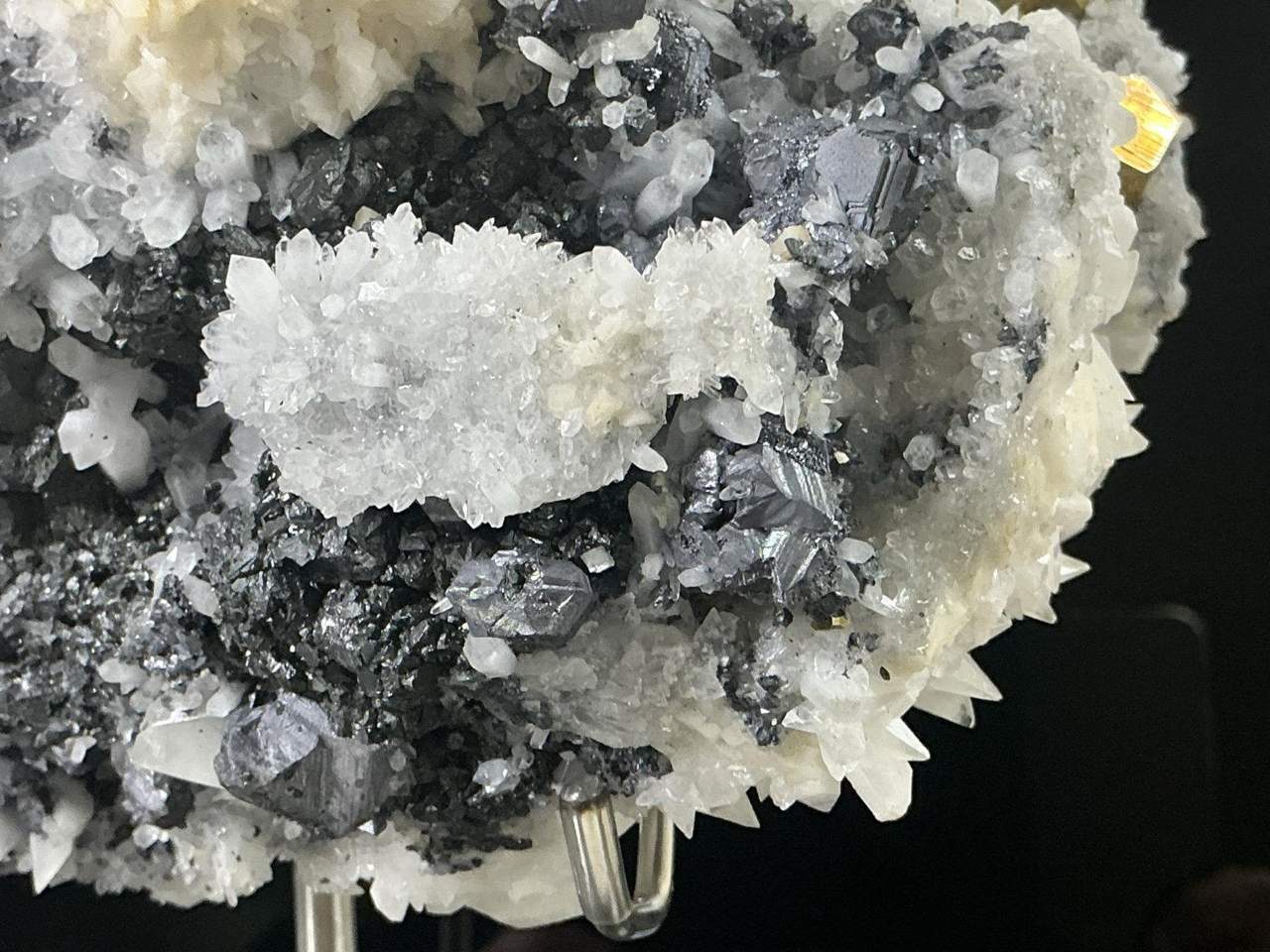
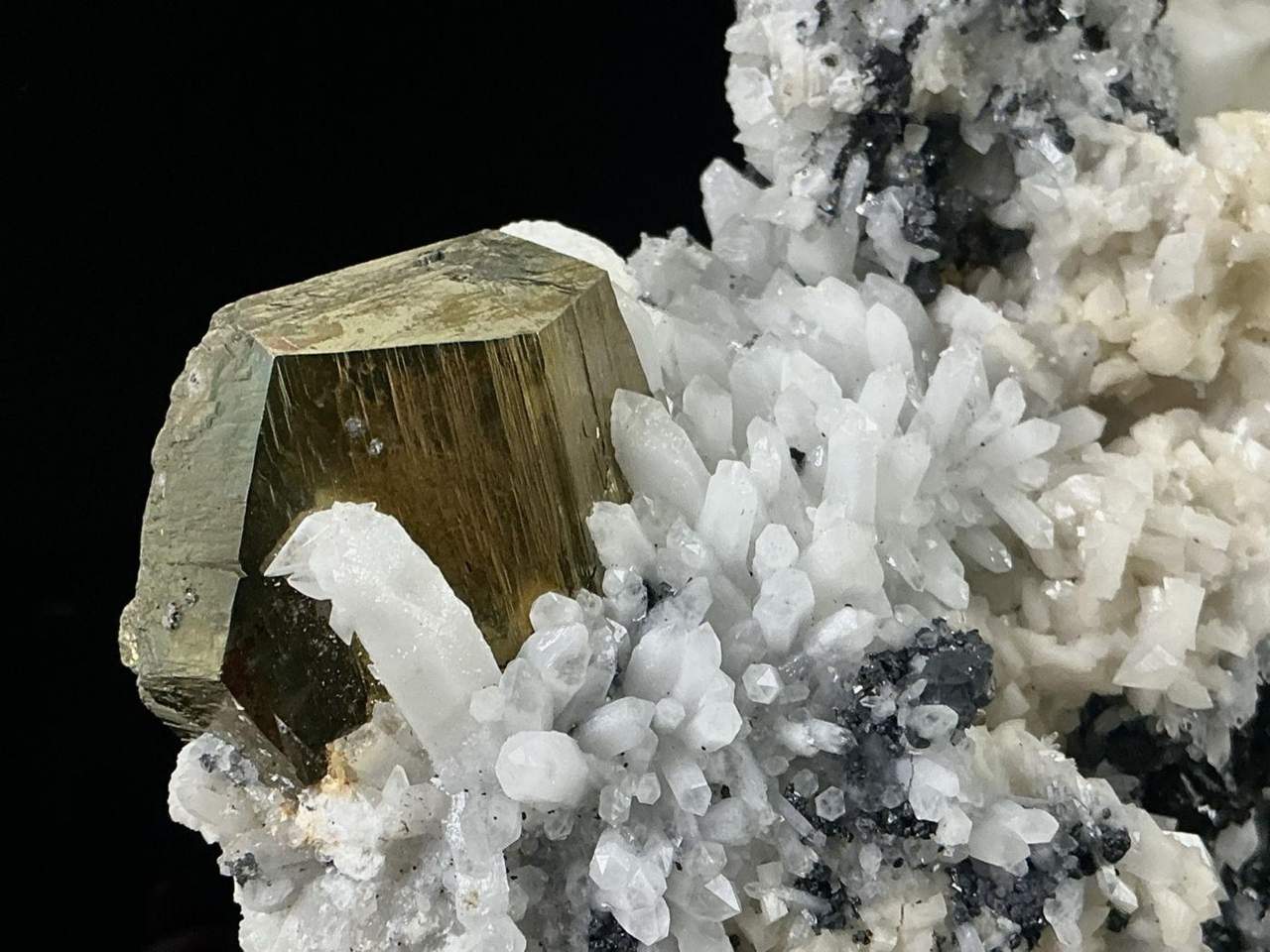
A highly aesthetic and substantial cabinet specimen featuring a richly textured association of lustrous cubic Pyrite crystals set within a dense matrix of sparkling Quartz and metallic Galena, complemented by well-formed Calcite.
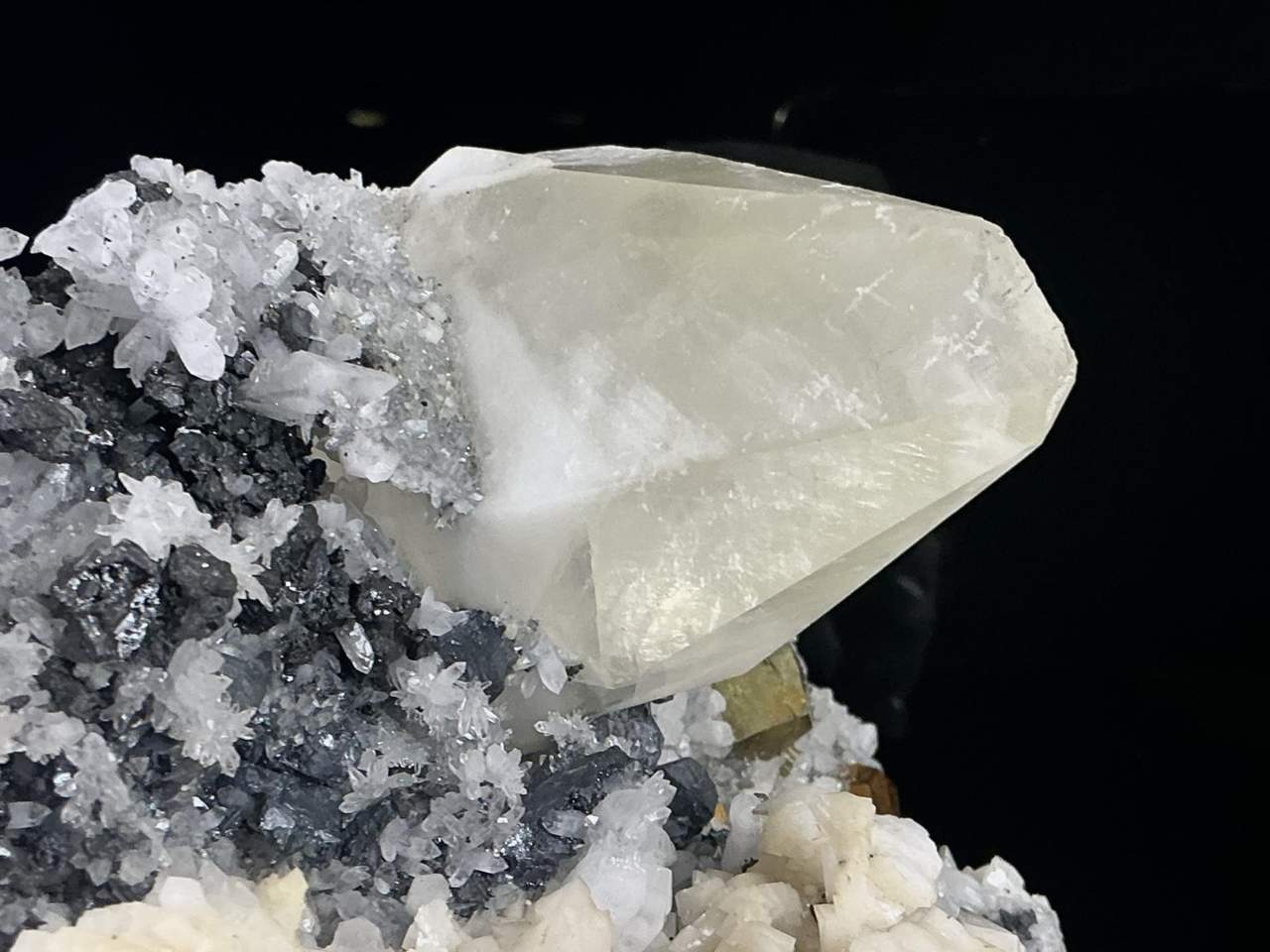
The composition is dynamic and balanced, with a prominent pale Calcite crystal rising above a complex field of intergrown Quartz and sulphides. This central crystal provides strong architectural presence, contrasting with the darker Galena-rich matrix beneath.
Well-defined Pyrite cubes are distributed across the specimen, displaying good lustre and natural striations. A fine drusy Quartz layer enhances brilliance throughout, adding depth and texture from multiple viewing angles.
Supplied by Meng Ting as originating from the Huanggang Fe–Sn deposit in Hexigten Banner, Chifeng City, Inner Mongolia, China. This is the supplier's locality information for the specimen.
Acquired through a private sourcing arrangement in China. The sourcing location is separate from the stated mineral locality.
A large and visually commanding display specimen, offering three-dimensional presence and multiple focal points for a curated collection.
Minerals: Pyrite, Calcite, Quartz and Galena, with minor Sphalerite attributed by the supplier.
Locality: Huanggang Fe–Sn deposit, Hexigten Banner, Chifeng City, Inner Mongolia, China (as supplied by Meng Ting).
The cubic habit gives the specimen a strongly geometric character. The visible faces and edges show how separate crystals meet and overlap within the group. Larger faces establish the outline, while smaller growth adds detail between them. The balance between exposed cubes and intergrown areas is a useful feature when comparing this piece with others of the same mineral.
The accompanying Calcite contributes a different crystal habit and surface character to the specimen. Its lighter or more translucent areas provide a contrast with the other recorded growth, allowing their separate outlines to be followed. The association is worth appreciating as a whole, with the arrangement and contact between the minerals adding detail beyond the featured crystals alone.
The accompanying Quartz brings a silicate crystal habit into the association. Its surfaces and crystal outlines contrast with the featured mineral, giving the specimen more than one kind of growth to examine. The way the minerals occupy the same piece is part of its character: the setting retains their natural relationship and adds depth to the overall display.
Pyrite is iron sulphide, known for its brassy metallic colour and crystallisation in the cubic system. Cubes, octahedra and pyritohedra are among its characteristic forms. Unlike gold, it is a brittle crystalline mineral. Well-defined faces and the way crystals meet make Pyrite particularly interesting for someone collecting natural geometry as well as metallic lustre.
Fine lines on Pyrite faces can reflect its growth pattern rather than decoration added to the surface. A group may combine broad mirror-like reflections with darker recesses between crystals. Where an accompanying mineral is recorded, the contrast between metallic Pyrite and that material provides another aspect to study, alongside the shape and spacing of the individual crystals.
The recorded origin is Huanggang Fe–Sn deposit, Inner Mongolia, China (supplier locality). Within a collection of Pyrite specimens, this locality gives the piece a geographical identity alongside its particular crystal habit and natural setting.
The specimen measures 240 × 200 × 120 mm, with a recorded weight of 4.628 kg. Its scale gives the natural architecture room to be appreciated as a whole, while the finer growth provides detail for closer study.
Condition: Good overall condition, with minor contacts consistent with the complexity and scale of the specimen. The photographs show the exact piece.
Support the stable matrix or the supplied mount when moving the specimen, avoiding pressure on projecting growth. A secure indoor display allows its natural form and surface detail to be appreciated while protecting exposed crystal edges.
Sold specimen
Collection archive
This specimen has sold. Contact me if you are looking for something similar.
Contact Avalon