Translation under improvement
Return to the original Avalon page and use your browser’s Translate option. If Google shows “unusual traffic”, try again with your VPN paused or on another network. Automatic translation may be unavailable or inaccurate. Payments stay on the original secure checkout.
Original English page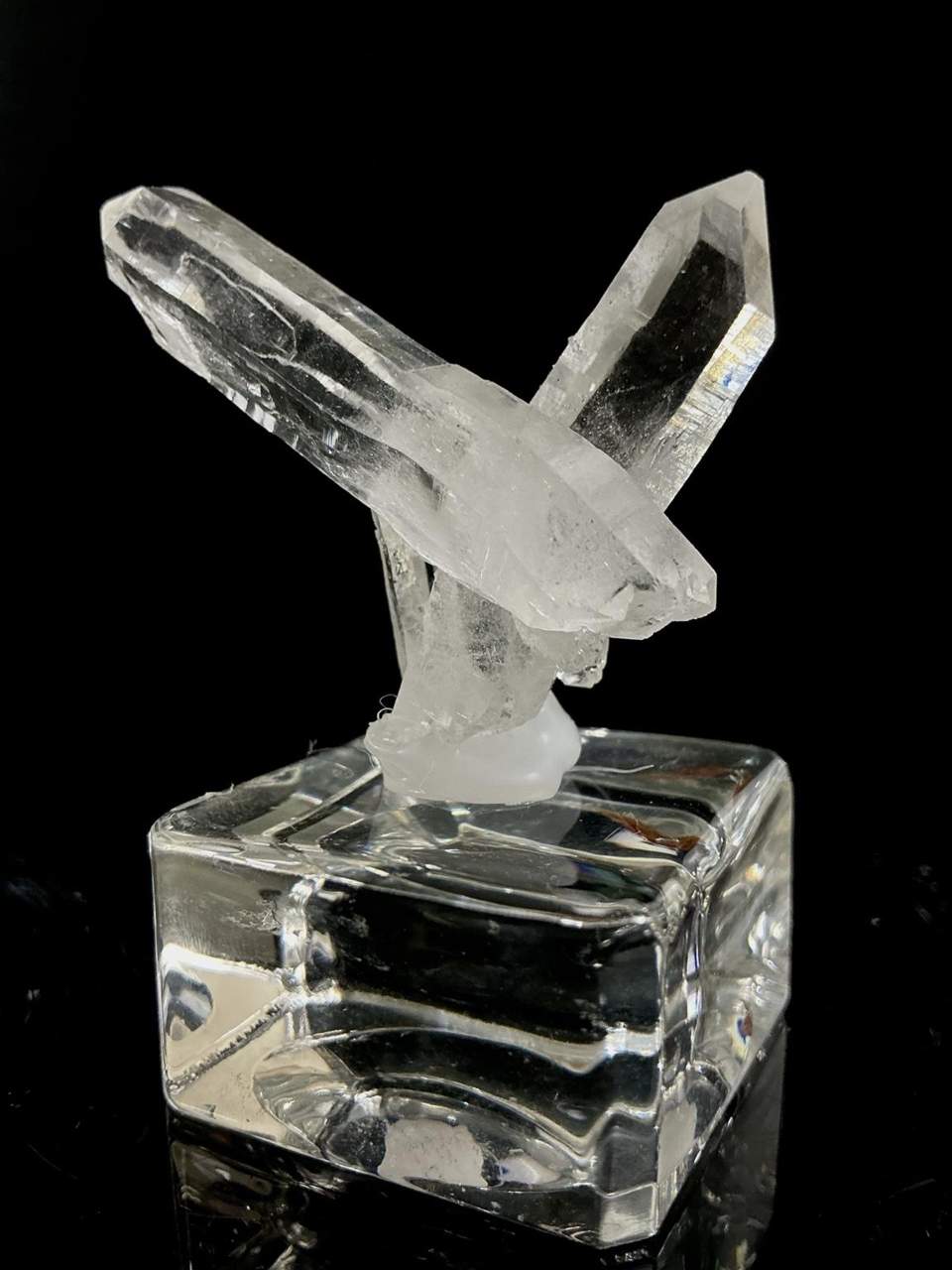
One natural mineral specimen
Reference: AC105
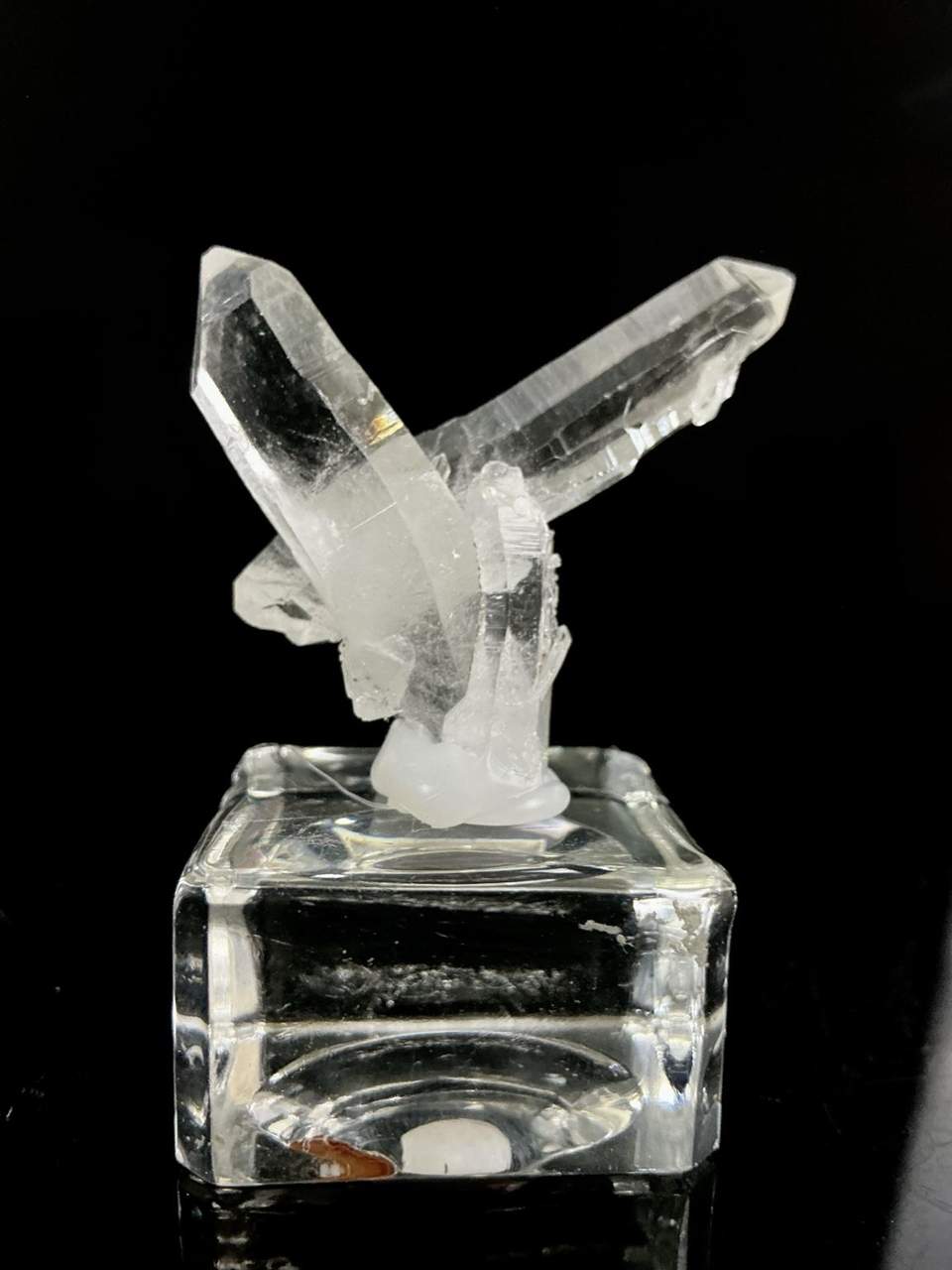
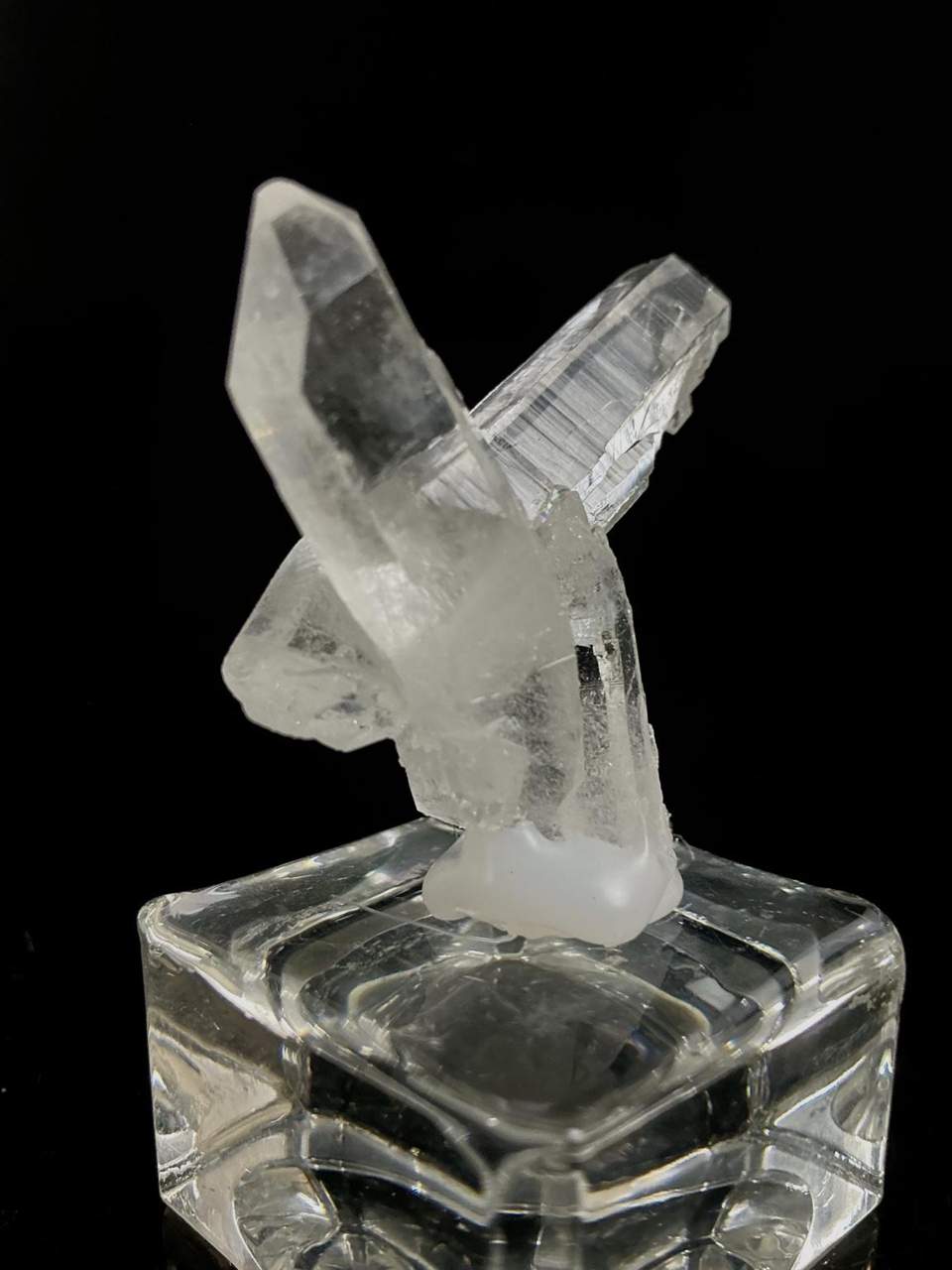
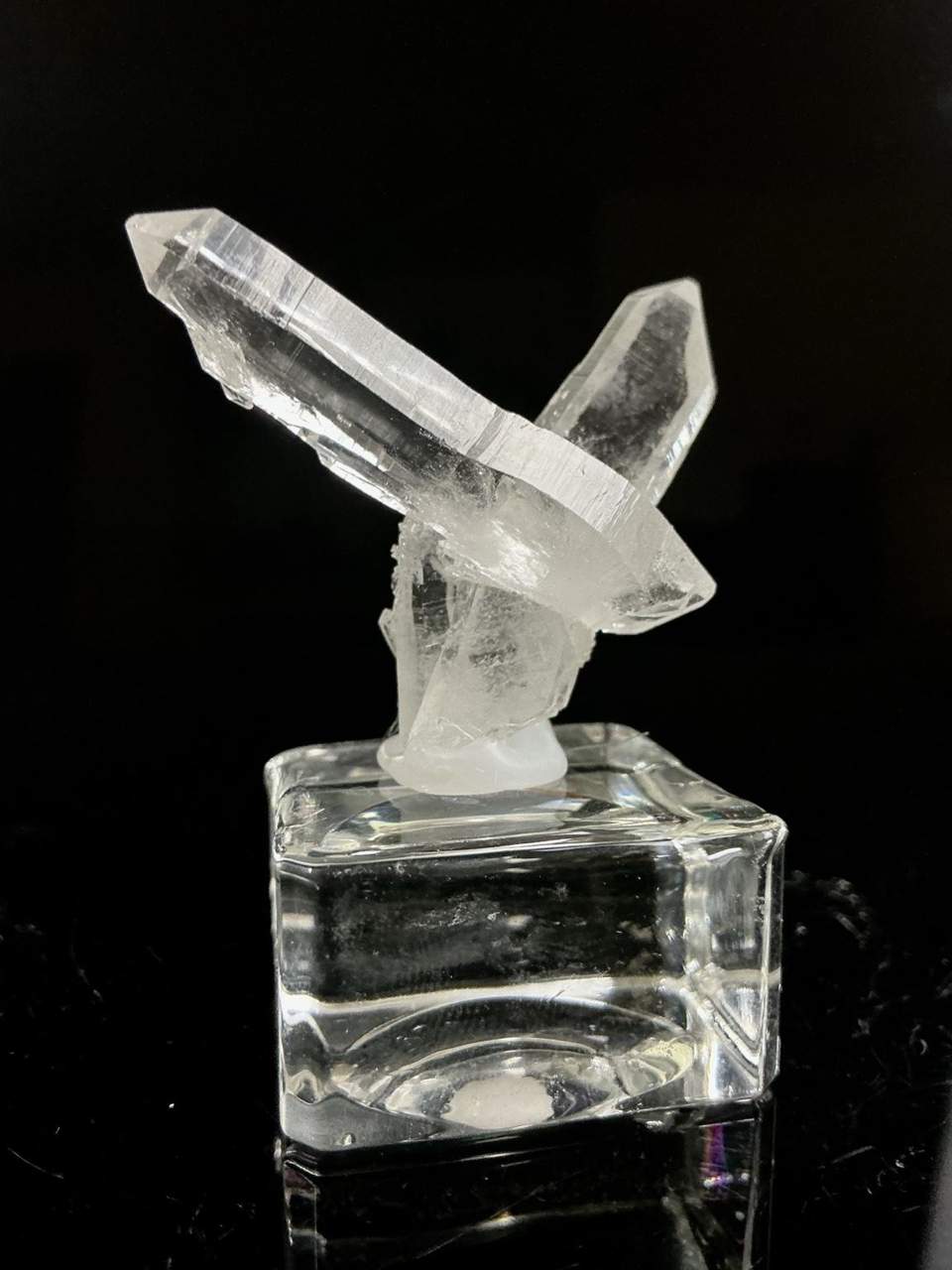
Crossed Clear Quartz Points — Jinkouhe, Sichuan
Jinkouhe District, Leshan, Sichuan Province, China
£35
Two prominent clear Quartz points cross above a compact group of smaller crystals. Glassy faces, fine growth lines and transparent areas give this small specimen an open, angular shape.
The two prominent points establish the crossing outline, while the smaller crystals form a more compact base beneath them. This balance between the open upper shape and the closely grouped lower growth is the main visual feature of the piece. It gives the cluster a different character to a single upright Quartz point.
The crossing arrangement described above is an important part of the specimen’s silhouette. It lets the direction of individual crystals be followed through the group, with open spaces making their outlines more apparent. Intersecting crystals alone do not establish a specific twin law; here the description concerns the visible arrangement rather than a laboratory-confirmed crystallographic relationship.
Quartz is silicon dioxide, a mineral whose familiar pointed crystals develop as material is added to growing faces. It occurs in many geological settings, including mineral veins and granite-related deposits. The variety of crystal lengths, orientations and degrees of transparency makes it an especially rewarding mineral to compare: pieces with the same composition can have very different natural architecture.
The glassy lustre of Quartz comes from light reflecting off its surfaces. Clear areas allow a view into the crystal, while internal fractures, veils and inclusions can scatter that light and create softer white regions. These features are distinct from the outer crystal faces. Studying both the interior and the outline adds another layer of interest beyond the familiar pointed shape.
The recorded origin is Jinkouhe District, Leshan, Sichuan Province, China. Within a collection of Quartz specimens, this locality gives the piece a geographical identity alongside its particular crystal habit and natural setting.
The specimen measures 45 × 40 × 20 mm. The proportions give a useful guide to its place in a display, with the individual crystal arrangement and mineral association remaining the principal points of interest.
For display, support the stable base or the supplied mount rather than a projecting crystal. Quartz is relatively hard, but pointed ends and natural contact areas can still be damaged by an impact. Gentle handling helps preserve the arrangement that gives this individual specimen its character.